
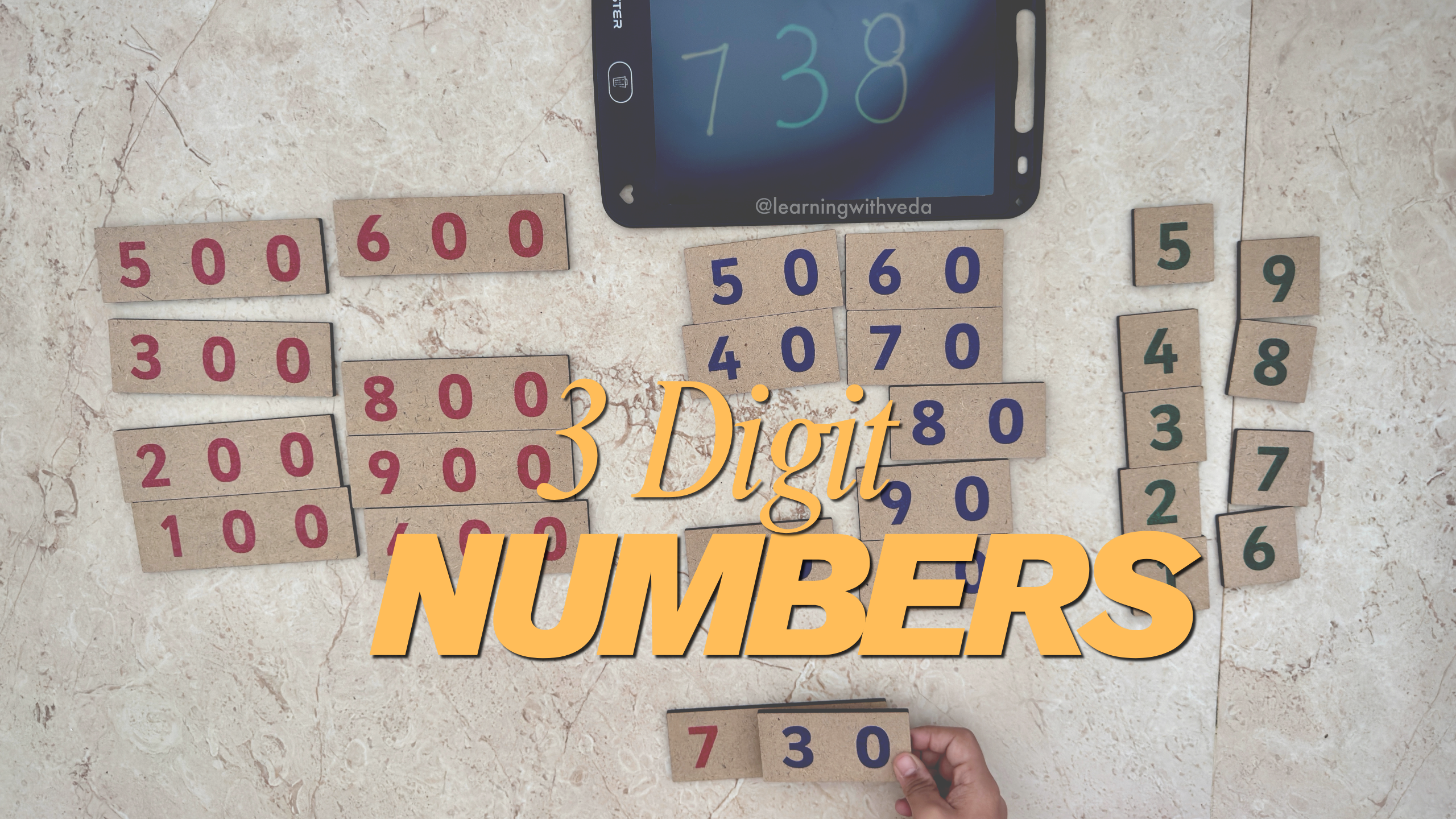
We have started working on three-digit numbers using Montessori number cards. This hands-on, colour-coded method is a game-changer for teaching place value. With the hundreds (red), tens (blue) and ones (green) cards, the concept of building big numbers became clear and visual for my child with Down Syndrome.
The cards use simple colours to show place value. The cards get smaller as the numbers get smaller. When she stacks them up, the zeros get covered perfectly. She can finally see that the “3” in 345 actually means 300.
- Hundreds are Red
- Tens are Blue
- Ones are Green


Montessori place value cards help children understand numbers in a simple, visual way.
A child may be able to read “345” but still not understand what the number means. Place value cards make this clearer by showing the number in parts 300, 40, 5.
When the cards are together, the child sees how the number is formed, 3 is 3 hundreds, 4 is 4 tens and 5 is 5 ones.
The cards are made so they can stack on top of each other. When they are placed together, the child can watch the number being built step by step
First 300, then add 40, then add 5. Now the child sees 345.


Why It Works
This is easier than trying to explain place value only with words or worksheets.
The colours also help children notice the difference between hundreds, tens, and ones. Many children learn better when they can see and touch the numbers.
For children with Down syndrome, this hands-on way of learning can make maths feel clearer, slower, and less stressful. Instead of memorising numbers, they begin to understand how numbers are made.
Simple Tips
- Start with small numbers first…like 12 or 25, before moving to 3 digit numbers.
- Let the child touch and arrange the cards themselves.
- Write the 3 digit number on paper in front of your child. This helps reduce confusion and shows what they are building.
- Keep lessons short and relaxed.
Leave a Reply